The Office of the Provost, in close collaboration with the Office of the Vice President for Research and Economic Development, intends to continue the research cluster process with primary focus on the hiring of world-class faculty. Hiring associated with the first set of funded research cluster proposals is now underway, and should result in the appointment of highly-accomplished, senior research faculty as well as talented and capable junior faculty in some of UNT’s most productive and promising areas.
As a result of last year’s research cluster competition, which was completed in the summer of 2008, six clusters were chosen to be fully supported, and another two received seed funding (see announcement http://research.unt.edu/news/announcementsevents.htm). We believe that continued investment in selected areas is critical to achieving UNT’s strategic goal of increased research and creative activities, and to quickly move our institution into the ranks of major public research universities in Texas and the nation. Therefore, we plan to conduct a second research cluster competition, to be carried out during the spring of 2009. The new competition may result in the selection of up to three new research clusters.
Therefore, by means of this RFP, we solicit your proposals for building additional research clusters. We request that proposals articulate the vision of how the proposed cluster would significantly enhance UNT’s
It is expected that a proposed research cluster
A research cluster proposal, in addition to addressing the listed criteria, should include
Please be aware that the 2009 process will give priority to promising areas not requiring substantial new space or infrastructure upgrades or renovations. No major new commitments of this sort can be made until those already approved are closer to completion. Thus, the next investments in research clusters will be directed primarily toward personnel (faculty, graduate students, professional staff, etc.).
Proposals must be submitted to the Office of the Vice President for Research and Economic Development on or before 5:00 pm, February 16, 2009. Each proposal must include a signature page indicating that each involved department chair and dean has been informed that the proposal is moving forward. A suggestive format for research cluster proposals is available on the website of the Office of Research and Economic Development.
All proposals will be reviewed by a committee consisting of two department chairs, two deans, two faculty members selected by the Faculty Senate, and two senior and two junior faculty members selected by the Office of the Provost in consultation with the Office of the Vice President for Research. The review process may include a detailed presentation by the proposal group and a question and answer session.
Successful research cluster proposals are expected to be implemented during the summer/fall of 2009 with searches conducted during the 2009-10 academic year for faculty positions to begin in Fall 2010 or later. Some research clusters may be deferred for a later start-up date.
For further details or clarification, please contact either Ruthanne Thomas or Kenneth Sewell (Associate Vice Presidents in the Office of the Vice President for Research and Economic Development).
Here is the Research Cluster Application
UNT scientists received a multi-million dollar government contract to study the causes of jet engine failure and how to develop stronger, more durable engines, congressional and university leaders announced today, (Oct. 22), at a news conference at Discovery Park. Photo from left, Hutchison, Burgess and President Gretchen M. Bataille. The university received $2.2 million this year and will receive an additional $6.36 million next year from the U.S. Air Force Research Laboratory in Ohio to fund the new Institute for Science and Engineering Simulation, or ISES.
The project was made possible through congressional appropriations. Under the direction from the Air Force, professors and researchers from UNT’s materials science and engineering and chemistry departments will use modeling, simulation and experimentation to study the performance of aircraft materials. “With wars in Iraq and Afghanistan, a great deal of stress is being placed on the country’s aircraft,” said Raj Banerjee, director of ISES and associate professor of materials science and engineering. “The research at UNT will help maintain and extend the life of aging aircraft, prevent catastrophic engine failure and aid the Air Force in developing better materials for the next generation of aircraft.” Sen. Kay Bailey Hutchison, R-Texas, and Rep. Michael Burgess, R-Lewisville, who helped secure the funding, said the partnership with UNT and the Air Force would be beneficial to both parties, as well as the entire country. “I am proud to support this collaborative effort between the University of North Texas and the U.S. Air Force to develop more durable engines for our brave military personnel,” Sen. Hutchison said. “The University of North Texas will be at the forefront of jet engine research and experimentation as the Air Force seeks to improve its next generation of aircraft.” Burgess said: “This ongoing federal investment in University of North Texas research will not only help the Air Force extend the lifespan of its aircraft, it will also yield solid returns for America’s national security in the long run.”
Today’s announcement is the latest piece of good news about significant support for research at UNT. Recently, the university committed to investing $25 million to develop collaborative research clusters that capitalize on UNT’s known areas of research strength. “UNT is one of Texas’ best universities and we are committed to excellence in everything we do. Senator Hutchison’s and Representative Burgess’s commitment to ensuring that our nation’s brightest researchers are working to solve serious problems facing the United States military is remarkable and sincerely appreciated,” said Bataille. “The work that the researchers involved in ISES will be able to do because of this funding will make a tremendous difference.”
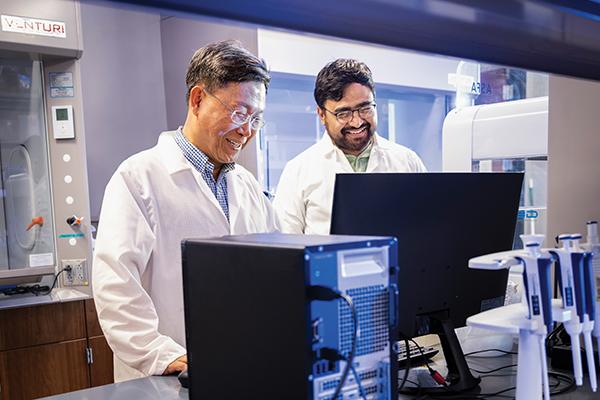
Two existing and nationally recognized centers at UNT will contribute to ISES: the Center for Advanced Research and Technology, or CART, and the Center for Advanced Scientific Computing and Modeling, or CASCaM. The research will be two-fold. An experimental part involves advanced characterization, a process of determining the structure and properties of a material using the unique, state-of-the-art facilities in CART. The modeling and simulation part will use CASCaM’s diverse modeling expertise to explore mechanisms associated with failure of aircraft components. For example, researchers will study how jet engine components react to hostile conditions, such as extreme temperatures and strong winds, in which they must operate. While the work is being funded by the military, researchers say their findings could be applicable to the aerospace industry as a whole, including commercial airlines. Tom Cundari, UNT Regents Professor of chemistry and co-director of CASCaM, said UNT’s appeal came from its unique ability to attack a set of problems using a wide array of simulation techniques from the atomic to the device level. “We can combine cutting-edge modeling and simulation with world-class characterization skills and facilities,” said Cundari, who is one of the eight professors who will work on ISES. “We’re a one-stop shop for the Air Force.”
Jose Grimaldo will be joining the University of North Texas on October 13th as the new Assistant Director of Sponsored Projects. Mr. Grimaldo has thirteen years of research administration experience and over twenty years of experience in project management, personnel management, and successful implementation of complex special projects, proposal preparation, marketing and public relations and sales.
Mr. Grimaldo comes to UNT from Texas A&M where he received his MBA and served as the Assistant Director of the Texas Engineering Experiment Station (TEES) in College Station and as a Funding Opportunities Coordinator/Proposal Administration. There, he marketed and promoted services for research proposal development, organized and conducted workshops and presentations for NSF and the National Council of University Research administrators, and generated and executed contracts with internal and external speakers and other universities in accordance with TEES contract regulations. Mr. Grimaldo had directed proposal submissions for agencies such as the US Departments of Energy and Defense, NASA, and NIH. He served as liaison with intellectual property negotiators and with Texas A&M General Counsel as directed in higher level contract negotiations. Mr. Grimaldo managed and supervised efforts conducted by the Industrial Distribution Program and the Thomas and Joan Read Center and reviewed programs based on input from presenters and participants. He also planned, implemented, executed and evaluated professional development seminar programs on the TAMU campus.
As the Assistant Director of Sponsored Projects, Mr. Grimaldo will oversee all pre- and post award administration of contracts and grants; and serve as the chief contracting officer managing the negotiation and execution of contracts; oversee award acceptance and all post-award non-financial activities. Mr. Grimalso has demonstrated an exceptional professional presence, and has strong presentation skills, experience in staff supervision, contract administration, and negotiation with various entities. He is goal oriented, a creative problem solver, and will be a welcome addition to the UNT community.
This year the University of North Texas Junior Faculty Summer Research Fellowship program plans to provide stipends of $5,000 each, in 2009 summer salary support, to selected junior faculty in support of their research projects.
This invitation is for full-time, tenure-track or non-tenured faculty with the rank of Assistant Professor. Letters of nomination by the department/division chairperson and dean are required. Applications and letters of nomination must be submitted to the office of the Vice President for Research & Economic Development, Administration Building, Room 175, by 5:00pm on November 3, 2008. Please check with your chairs and deans for departmental deadlines.
In addition to the application itself, a curriculum vita is required. Application forms are available on our web site at http://research.unt.edu/intramural/intramural.htm. For additional information, please contact Sarah Sprinkle at (940) 565-4119 or Sarah.Sprinkle@unt.edu.
The Office of the Vice President for Research and Economic Development would like to announce that Dr. Denise Perry Simmons with be joining UNT on September 19th as the Director (I) of Research Development. She will lead the Research Development Team that consists of Director (II) of Research Development (Dr. Richard Nader), and an Assistant Director that will be hired shortly. Dr. Simmons brings over thirty years of experience in multi-disciplinary basic and clinical research across academia, biotech/pharmaceutical groups, and federal and state governments, as well as medical centers.
Dr. Simmons is coming to UNT from The John Theurer Cancer Center of Hackensack University Medical Center in Hackensack, New Jersey, where she served as the Director of Clinical Research. While at Hackensack, Dr. Simmons has facilitated pharmaceutical partnerships for clinical research trials and systems for patient education, and restructured the Clinical Cancer Research Program to provide upward mobility and education/training programs for physicians, investigators, nurses, and research data staff. Previously, Dr. Simmons was a Cancer Research Training Award Fellow at the National Institute of Health (NIH) National Cancer Institute in Bethesda, Maryland and has worked for the University of Texas, University of Texas Medical School, University of Chicago, and the Texas Animal Health Commission. She has developed seven drug design patents and has received the ASCO 2008 Community Oncology Research Award as well as the NIH Technology Transfer Award and NIH Outstanding Mentor Awards in 2004. Dr. Simmons has taught at the University of Maryland University College, National Institutes of Health/NCI, and the University of Texas at Austin. She has exceptional experience in and multiple recognitions for grant-writing, program administration and development, staff management, grant management, contract and budget negotiation, translational research, and domestic and international partnership development. She has been a PI or Co-PI on site research grants totaling $1.5 million.
Responsibilities for the Director of Research Development will include developing university-wide initiatives to advance faculty research, creativity and innovations through proposal development, and increase extramural funding. Dr. Simmons will assist in research center level partnership development; reviewing, editing, and writing of sections of center level and other major research proposals for government agencies, and other organizations; and develop, organize and present faculty grant writing workshops and seminars. She will also provide much needed experience and connections with NIH, and will help increase funding from NIH, as well as from other federal agencies such as the National Science Foundation and the US Departments of Defense, Energy and Education. Finally, Dr. Simmons will work to expand UNT’s research partnership with the UNT Health Science Center. Dr. Simmons’s extensive work, teaching and research experience will be an immense addition to the UNT community.
UNT to invest millions in multi-disciplinary research collaborations The University of North Texas will invest at least $25 million in collaborative research in a sweeping effort to strengthen the state’s economy, bolster research and develop technology vital to addressing today’s most pressing needs.
The investment begins this year with the development of six collaborative research clusters and the recruitment of world-renowned faculty. The clusters will enhance and expand the innovative research already underway at UNT by bringing together faculty from across colleges and disciplines to work together, exchange ideas and explore solutions.
As the main thrust of the plan, the university expects to hire several new faculty members for each cluster. Many of the new faculty hires will be senior level researchers with national and international reputations.
“UNT is well-known for its excellence in the arts. Through this investment, we will expand our research excellence and raise our reputation as a public research university that competes at the top-level in everything we do,” said President Gretchen M. Bataille, who publicly announced the investment plan Tuesday during the university’s annual convocation.
Among the clusters’ wide-ranging and high-profile initiatives will be discovering more effective ways to treat conditions such as autism, cancer and heart disease; developing more durable jet engines; investigating molecular plant signals that could lead to innovations impacting many different industries and needs; and exploring new ways to support and improve environmental sustainability.
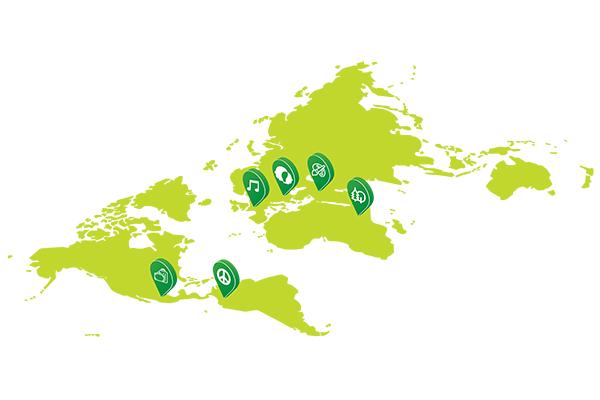
UNT’s first six clusters capitalize on the national reputation and expertise of researchers in several important areas.
Bio/Nano Photonics will explore how light can be used in extremely small dimensions to develop new nano-devices with applications in medicine, communications, energy and a number of other fields. This cluster builds upon the expertise of 15 faculty members from nine departments including some from the UNT Health Science Center at Fort Worth.
Materials Modeling will produce predictive tools for creating next generation materials that will help scientists reduce greenhouse gas in the environment, develop better jet engines and discover new therapies for serious battlefield injuries. The cluster includes 11 faculty members from three departments and will expand UNT’s national leadership role in computational chemistry to other research areas.
Developmental Physiology and Genetics will explore developmental biology at the molecular, cellular and physiological levels, which will contribute to scientific advances for human conditions, such as tissue trauma, clotting disorders and heart disease. This cluster will build upon the established expertise of six UNT faculty members in different areas of life sciences and will collaborate with UNT Health Science Center researchers.
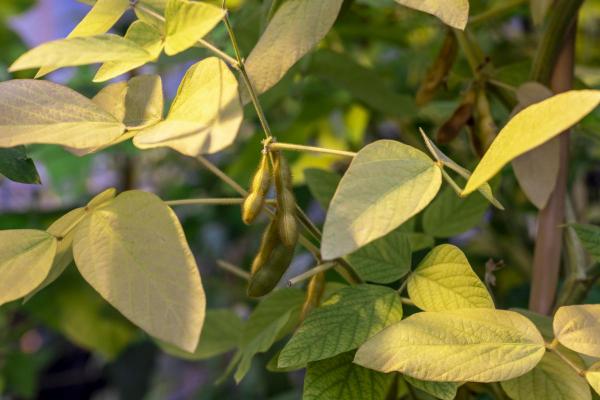
Signaling Mechanisms in Plants will study the molecular signals of plants that control growth, crop yield, defense against pathogens and responses to stress. Advances in understanding of plant metabolism have stimulated new technologies in agriculture, human nutrition and medicine. The cluster will include seven UNT faculty members across two departments who are recognized as national leaders in this field and will work closely with the Noble Foundation (Ardmore, Okla.), a leading research group in this field.
Autism Spectrum Disorders will expand field-based research and training programs in education, behavior analysis and learning technologies for autism, which affects one percent of children, or about 800,000 children each year in the United States alone. Currently, 17 faculty members across eight departments have made innovations in applied autism research.
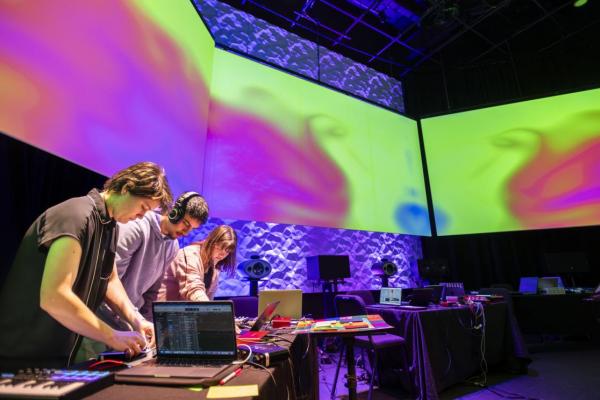
Advanced Research in Technology and the Arts will investigate the ways advances in sensor technologies and other engineering innovations can change and enhance the production and delivery of art. The cluster will expand the work being done at the nationally-acclaimed Center for Experimental Music and Intermedia, and 15 faculty members across seven disciplines now contribute to this area.
In addition, two areas of interdisciplinary research will receive seed funding to encourage further development: Human Health and Sustainable Environment, which will research how environmental risks accumulate and affect health; and Multi-Scale Damage, Lifetime Prediction and Design of Materials, which will study damage caused by aging in various physical materials in hopes of creating new, more resilient materials for aerospace applications, automobiles and prosthetic devices.
Also, as part of the plan, UNT will create a new multi-institutional research center focused on immigrant studies.
UNT took an unusual approach in allocating its resources to these interdisciplinary research areas. Rather than administering a top-down approach, UNT called for faculty to develop and submit proposals last January that laid out plans to address specific research problems by working across traditional disciplinary boundaries.
The UNT Office of Research and Economic Development directed the cluster selection process and 11 faculty members served on a review committee chaired by Vish Prasad, vice president for research and economic development. The committee assessed 37 proposals and recommended to Provost Wendy K. Wilkins that six clusters receive full funding, that two receive seed funding and that a third be considered for center development.
“We’re focusing our investment in areas that will produce results,” Wilkins said. “UNT will be the leader in these areas, and we’re confident enough of our ability to succeed that we are willing to invest millions of dollars.”
The clusters are an integral part of UNT’s comprehensive effort to expand research across the university. “We are very committed to expanding UNT’s research contributions and I am grateful to the committed faculty members who helped make successfully launching this plan a reality,” Prasad said. “This initiative will attract premier research faculty to UNT and allow us to dramatically improve our already significant contributions to advances in knowledge as well as our research funding.”
Clusters will take advantage of and expand the university’s research infrastructure, such as the Center for Advanced Research and Technology, a $15-million, federally-funded collection of rare, high-powered microscopes and other high-tech materials characterization equipment at Discovery Park, UNT’s 290-acre research park that opened in 2004. Research in many of these clusters will lead to new technologies contributing to incubation and start-up of new companies at Discovery Park.
In recent years, UNT has made significant strides to support science and research, including the opening of a 105,000-square foot Chemistry Building in 2004 and next month’s ground breaking of the new, 81,000-square-foot Life Sciences Complex, which will house biochemistry, molecular biology, plant science and developmental physiology and genetics. (Information from a September 9, 2008 press release; for follow-up media information, contact Sarah Bahari, 940-565-4835, Metro 817-267-0651, sarah.bahari@unt.edu.)
Dr. Richard Nader will join the Office of the Vice President for Research and Economic Development on September 2nd as the new Director of Research Development (II). Dr. Nader is the first member of the Research Development Team to be hired. This team will aid faculty in writing research proposals for external funding and will eventually include a Director (I) and Assistant Director.
Dr. Nader’s duties will include developing university-wide initiatives to advance faculty research, creativity and innovations through proposal development. He will work with faculty and research administrators in competitive development of funding in the areas of education, humanities, social sciences, and the arts; assist in writing, reviewing, editing, and rewriting proposals for government agencies, foundations, and not-for-profit organizations; and develop and present faculty grant writing workshops and seminars.
Bringing a wide array of experience to UNT, Dr. Nader currently works for the National Science Foundation as a Program Manager in the Office of International Science and Engineering. At NSF, he is responsible for the oversight of the merit review grant process; budget planning and management of NSF sponsored activities with China, and serving on several foundation-wide committees to promote international research and education. Previously, Dr. Nader served as the Director for the Institute for Pacific Asia (IPA) at Texas A&M from 2000-05, during which time, IPA secured $1.5 million in grants from federal and private foundations.
Dr. Nader has developed training courses and taught proposal development and grant writing at the graduate level. He has served non-profit organizations with grant-writing assistance. Dr. Nader’s experience with the National Science Foundation, grant-writing, and research development will be a great asset to UNT as the Office of the Vice President for Research and Economic Development continues its expansion. A motivated individual and seasoned professional, Dr. Nader will certainly increase UNT’s competitive edge for external funding and research grants.
The Office of the Vice President for Research and Economic Development is excited to announce the addition of Harold Strong to its team after a national search. Mr. Strong will join UNT as the Director of Discovery Park and Technology Transfer on Monday, August 18, 2008.
Mr. Strong will be responsible for the design and development of UNT Discovery Park including real estate, obtaining funding from Government and non-Government sources, and developing partnerships with local governments, businesses and other stakeholders. He will also develop and implement strategies to foster incubators and attract start-up companies, as well as establish relationships with venture capital firms, individuals, government and non-government agencies for financing.
As UNT’s Technology Officer, Mr. Strong will oversee the Intellectual Property/Technology/Patent development and commercialization processes for the University.
Harold Strong is a nationally recognized leader in research park development. Currently, he is the Director of Research Park at Texas A&M University, and brings with him a wealth of experience regarding research parks and business incubators. Mr. Strong is also one of the two vice presidents of the Association of University Research Parks (AURP), an organization whose missions is “to promote the development and operations of research parks that foster innovation, commercialization and economic competitiveness in a global economy through collaboration among universities, industry and government.”
Since his time at Texas A&M began in 2004, Mr. Strong has developed strong partnerships between the university and industry; worked with leaders in Bryan and College Station to strategically define and execute an economic development plan; has developed and managed the incubation process and 50,000 square feet of incubator space; and facilitated the development and construction of facilities to support research collaborations.
Mr. Strong has previous experience working with Collegiate Development Services in Irving where he was the Vice President of Business Development and worked directly with university administrators, architects and investment banks to design and develop new student housing for colleges and universities utilizing tax exempt financing. He also has extensive experience in sales, marketing, and business operations.
The addition of Mr. Strong will bring UNT to the forefront of technology transfer, commercialization and incubation and will give UNT Discovery Park national and international visibility. His experience is invaluable and ambitious drive is exceptional.