The Advanced Materials and Manufacturing Processes Institute (AMMPI) brings together
a diverse, multidisciplinary community of faculty dedicated to pushing the boundaries
of materials science and engineering. Our members are leaders in structural and functional
materials, advanced computational modeling, and state-of-the-art manufacturing processes.
Collectively, AMMPI faculty leverage expertise to design, develop, and optimize high-performance
materials and processes that meet the rigorous demands of the aerospace, automotive,
energy, and semiconductor industries. Their collaborative, cross-cutting research
strengthens UNT’s position as a hub for innovation in next-generation materials and
manufacturing technologies.
Below you will find brief bios for each AMMPI faculty member, showcasing the depth
and breadth of expertise that drives the institute’s impact.
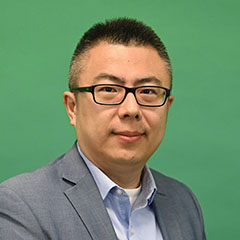
Marcus Young, Director
Dr. Young is an Associate Professor in
Materials Science and Engineering. Dr. Young is an expert in development, processing, and characterization of structural
metallic materials, with a special interest in shape memory alloys, multi-component
alloys, and porous metallic foams and composites, as well as X-ray scattering techniques
and thermo-mechanical testing. He earned a B.F.A. in Ceramics and a B.F.A. in Sculpture
from the University of North Texas, a B.S. in Metallurgical and Materials Science
and Engineering from Colorado School of Mines, and a Ph.D. in Materials Science Engineering
from Northwestern University.
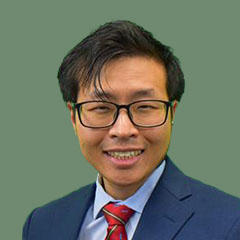
Daniel Afosah
Dr. Daniel K. Afosah is an Assistant Professor of
Chemistry at the University of North Texas, specializing in chemical biology and medicinal
chemistry. His research focuses on the discovery and development of glycosaminoglycan‑based
therapeutic molecules and small‑molecule inhibitors with applications in blood-clotting
disorders, inflammatory diseases, cancer, and other medically relevant conditions.
He earned his Ph.D. in Pharmaceutical Sciences from Virginia Commonwealth University,
following a Bachelor of Pharmacy and a Master’s in Pharmaceutical Analysis and Quality
Control from Kwame Nkrumah University of Science and Technology (KNUST) in Ghana.
Samir Aoudai
Dr. Samir Aouadi is a Professor of
Materials Science and Engineering at the University of North Texas, specializing in surface engineering, thin-film
deposition, and ultrahigh-temperature ceramics. His research focuses on designing
advanced coatings and materials capable of withstanding extreme environments, with
applications spanning aerospace, defense, and high-performance technologies. He earned
his Ph.D. in Physics from the University of British Columbia, following earlier degrees
from the University of Ottawa and the University of Constantine.
Rajarshi Banerjee
Dr. Banerjee is a Regents Professor in
Materials Science and Engineering. He researches advanced metallic and functionally graded composite (or hybrid) materials
for aerospace, energy, and biomedical applications. He leads the Institute's structural
materials core. He also holds appointments as an adjunct professor in the materials
science and engineering at the Ohio State University and as a visiting professor at
Nanyang Technological University in Singapore.
Diana Berman
Dr. Berman is an Assistant Professor in
Materials Science and Engineering. Before joining UNT in Fall 2016, Dr. Berman worked in the Center for Nanoscale Materials
at Argonne National Laboratory. Her research interests focus on the synthesis and
processing nanostructured carbon materials as well as understanding their tribological
properties, from nano to macroscale friction and wear behavior, and their impact on
the performance of mechanical systems, ranging in scale from MEMS/NEMS devices up
to wind turbines.
Dwight Burford
Dr. Burford is a Research Professor in
Materials Science and Engineering. After receiving his doctorate from the Colorado School of Mines in 1987, Dr. Burford
conducted postdoctoral studies at Ohio State University. In 1989, he joined Boeing
in Wichita, Kansas, where, as an Associate Technical Fellow, he conducted research
and development in metal forming, machining, welding, heat treating, etc. Beginning
in 2000, Dr. Burford's R&D work in friction stir welding led to production flight
hardware in mid-2005. From the fall of 2005 to the summer of 2012, he directed the
NIAR Advanced Joining Lab at Wichita State University. Since mid-2012, Dr. Burford
has also worked as a metallurgical engineering consultant.
Linxiao Chen
Dr. Linxiao Chen is an Assistant Professor of
Chemistry at the University of North Texas, specializing in heterogeneous catalysis, sustainable
chemical transformations, and surface reaction mechanisms. His research explores the
fundamental principles that govern catalytic processes, with the goal of developing
efficient solutions for challenges in energy, the environment, and advanced materials.
His work spans areas such as plastic recycling, biomass conversion, hydrogen storage
and release, and small-molecule activation. Dr. Chen earned his Ph.D. in Physical
Chemistry from Indiana University, following his undergraduate studies in Chemistry
at Peking University. He completed postdoctoral research at the Pacific Northwest
National Laboratory before joining the faculty at UNT.
Wonbong Choi
Dr. Wonbong Choi is a University Distinguished Research Professor of
Materials Science and Engineering at the University of North Texas, specializing in nanomaterials, nanoelectronics,
and advanced energy-storage systems. His research focuses on developing carbon-nanotube
and two-dimensional material–based technologies for high-performance electronic devices,
bio-sensing platforms, and next-generation rechargeable batteries. He earned his Ph.D.
in Materials Science and Engineering from North Carolina State University, following
earlier degrees in Metallurgical Engineering from Hanyang University in Seoul.
Francis D’Souza
Dr. D'Souza is a Regents Professor in the
Department of Chemistry and
Materials Science and Engineering. He is presently the co-leader for the functional materials core of AMMPI. His research
covers wide areas of chemistry, nanophotonics, energy storage and materials science.
He received his doctorate from the Indian Institute of Science, Bangalore, India,
and conducted post-doctoral work at the University of Houston and University of Dijon,
France.
Jincheng Du
Dr. Du is a Professor in
Materials Science and Engineering and serves as a leader for AMMPI's computational core. He studies the structure-property
relationship of materials using atomistic and other simulation methods. He received
his doctorate at New York State College of Ceramics at Alfred University and worked
as a postdoctoral fellow at the Pacific Northwest National Laboratory and University
of Virginia.
Hsin-Yu Ko
Dr. Hsin‑Yu Ko is an Assistant Professor of Computational & Theoretical
Chemistry at the University of North Texas, specializing in first‑principles and large-scale
computational modeling of condensed-phase chemical systems. His research focuses on
developing quantum‑mechanics and statistical‑mechanics-based algorithms — often combining
machine‑learning and high-performance computing — to investigate materials and chemical
processes relevant to energy, environmental, and materials sciences, including fuel
cells, polymer behavior, “forever chemicals,” and complex reactive systems. He earned
his Ph.D. in Theoretical Chemistry from Princeton University in 2019, followed by
postdoctoral research at both Princeton and Cornell, before joining UNT in 2024.
Melanie Ecker
Dr. Ecker is an Assistant Professor in the Department of Biomedical Engineering and
the director of the Ecker Lab - Smart Polymers for Biomedical Applications. Her research
interests lie at the intersection of polymer science and biomedical engineering. She
combines both fields to develop the next generation of biomedical devices based on
smart polymeric materials. These materials mainly consist of shape memory polymers
responsive to bodily conditions and mechanically adaptive to comply with a tissue.
Dr. Ecker received her doctorate in natural sciences from Freie Universität in Berlin,
Germany.
Mohamed El Bouanani
Dr. Mohamed El Bouanani is an Associate Professor in
Materials Science and Engineering. He received His PhD in Physics from the Universite Claude Bernard Lyon I in 1990.
Areas of research include growth, processing and characterization of inorganic thin
film nanostructures for micro/nano-electronic and photovoltaic applications. Other
areas of research include nanoscale interfacial studies of complex multi-layered nanostructures:
size effects on thermal stability, diffusion and reactions.
Teresa Golden
Dr. Golden is a Professor in the
Department of Chemistry and the Director of the Forensic Science Program at the University of North Texas.
Her research covers the study and electrosynthesis of nanomaterials of unique compositions
and phases, including alloys, rare earth oxides, cermets, and metallic composites.
She oversees the X-ray Diffraction Laboratory. An expert in corrosion protection coatings,
she supports AMMPI's outreach to many industries. She received a doctorate in chemistry
from New Mexico State University.
Patrick Horn
Dr. Patrick Horn is an Assistant Professor of
Biological Sciences and a researcher at the
BioDiscovery Institute at the University of North Texas, specializing in plant biochemistry and metabolic
pathway analysis. His research focuses on characterizing enzymes and lipid biosynthesis
pathways in plants to advance understanding of bioproduct formation, biofuels, and
industrially relevant plant metabolites. He earned his Ph.D. in Biochemistry from
the University of North Texas, following a B.S. in Biochemistry from The University
of Texas at Austin, and completed postdoctoral research in plant lipid metabolism
at Michigan State University before joining UNT in 2022.
Lee Hughes
Dr. Hughes is Associate Dean for Undergraduate Studies in the
College of Science and an Associate Professor of
Biology at the University of North Texas (UNT). He has a bachelor's degree in English, a

master’s degree in biology, and a doctorate in Microbiology, all from UNT. He conducts
both microbiology and science education research. Dr. Hughes focuses on early research
experiences for biology majors and serves as director for UNT's Phage Hunters Advancing
Genomics and Evolutionary Science (PHAGES) program, an affiliate of the Howard Hughes
Medical Institute's Science Education Alliance. His research laboratory focuses on
the isolation of novel bacterial viruses, known as bacteriophages, that infect the
genus Streptomyces.
Sameehan Joshi
Dr. Sameehan S. Joshi is an Assistant Professor of
Materials Science and Engineering at the University of North Texas, specializing in advanced and additive manufacturing
of metallic and ceramic materials. His research combines experimental and computational
approaches to improve beam-based fusion, binder-jet additive manufacturing, and surface
treatments for aerospace, automotive, biomedical, and tooling applications. He earned
his Ph.D. in Materials Science and Engineering from UNT, following degrees from the
Indian Institute of Science and Metallurgy (M.S.) and College of Engineering Pune
(B.Tech).
Jeffry Kelber
Dr. Jeffry A. Kelber is a Regents Professor of Analytical & Surface/Materials Chemistry
in the Department of
Chemistry at the University of North Texas, specializing in surface science, analytical chemistry,
and materials chemistry. His research focuses on electrocatalytic reduction of nitrogen
to ammonia, CO₂/CO activation and reduction, plasma and free‑radical interactions
with semiconductor surfaces, and the development of novel oxides and oxynitrides for
optical and electronic applications. He earned his B.S. in Chemistry from the California
Institute of Technology and his Ph.D. in Inorganic Chemistry from the University of
Illinois at Urbana–Champaign.
Jiho Lee
Dr. Jiho Lee is an Assistant Professor of
Materials Science and Engineering at the University of North Texas, specializing in nanomaterials synthesis, energy
storage, and catalysis. His research focuses on designing and fabricating nanostructured
materials for applications in batteries, supercapacitors, and clean energy technologies.
He employs advanced characterization techniques to understand the fundamental mechanisms
driving material performance. He earned his Ph.D. in Materials Science and Engineering
from the University of California, Los Angeles.
Xiao Li
Dr. Li is an Assistant Professor of
Materials Science and Engineering. Her research interests are self-assembly of soft materials--polymer, liquid crystals,
elastomer, colloidal particles--into nano/mesoscale structures for optical, optoelectronic,
biomedical, miniaturized actuators and flexible sensor applications.
Shengqian Ma
Dr. Ma is a Professor and Welch Chair in Chemistry in the
Department of Chemistry. His research focuses on the development of functional porous materials including
metal-organic frameworks (MOFs), covalent organic frameworks (COFs), and porous organic
polymers (POPs) for energy, biological, environmental-related applications. He has
published more than 300 papers with over 32000 total citations and the H-index of
96; he has been selected as the Highly Cited Researcher (top 1%) for eight consecutive
years (2014-2021).
Maurizio Manzo
Dr. Manzo is an Assistant Professor in
Mechanical Engineering. He is the Director of the
Photonics Micro-Devices Fabrication Laboratory and is involved in sensor development, instrumentation and flow diagnostics, and
biomedical micro-devices. He received his Doctorate in Mechanical Engineering from
the Southern Methodist University (SMU).
Reza Mirshams
Dr. Mirshams is a Professor in
Mechanical Engineering. He has Ph.D. degree in Industrial Metallurgy and Metallurgical Engineering from
the University of Birmingham, United Kingdom, and M. Engr. and B.S. from the University
of Tehran. He is a Licensed Professional Engineer with combined industrial, academic,
and forensic engineering experiences. His research interest is in deformation mechanisms,
fracture and failure analysis, and materials performance in engineering products.
He has been the recipient of research grants from federal and local agencies and industries.
He has taught courses in the areas of metallurgy, manufacturing processes of materials,
failure analysis of materials, fracture mechanics, fatigue, creep, engineering product
design and materials selection, corrosion, and performance of materials. He has been
ABET Commissioner, Team Chair, engineering Program Evaluator, and current member of
The Minerals, Metals & Material Society (TMS) and National Association of Corrosion
Engineers (NACE).
Sundeep Mukherjee
Dr. Mukherjee is an Associate Professor in
Material Science and Engineering. Dr. Sundeep Mukherjee received his bachelor's degree from the Indian Institute of
Technology, and his master's and doctoral degrees from the California Institute of
Technology. Prior to coming to UNT, he worked as a post-doctoral research associate
at Yale University and senior engineer in Intel's Logic Technology Development division.
Seifollah Nasrazadani
Dr. Nasrazadani is a Professor and Senior Director for Technology and Management Programs
in
Mechanical Engineering. His research has contributed to understanding the mechanisms of atmospheric corrosion
of high-strength low-alloy steels and the characterization of corrosion products of
ferrous and non-ferrous alloys. His research group is developing a standard atmospheric
corrosion test protocol to assess corrosion resistance in all-aluminum microchannel
heat exchangers.
Jens Neu
The research in the Neu lab is focused on understanding photophysics in emerging materials
for solar applications. The main spectroscopic techniques developed in the lab focus
on Terahertz (THz) spectroscopy. The THz range of the electromagnetic spectrum is
very sensitive to mobile charges. In combination with femtosecond laser pulse-excitation,
THz provides frequency, phase, and time resolved insight into photoconductivity. Additional
to this rather established technique the Neu lab is actively pushing the limits of
the temporal range of THz spectroscopy and combining the spectroscopic read-put with
external biases using transparent electrodes. A THz-transparent three-electrode cell
is used to adjust the Fermi level in the material under study and to mimic in-operando
conditions for solar cells. The breath of materials to which these techniques can
be applied is huge and the Neu lab is always open for collaborations. In house, the
focus lies on photoconductive metal-organic frameworks (MOF) and exploring their potential
for ultra-light solar cells.
Mohammad Omary
Dr. Omary is a University Distinguished Research Professor in the
Department of Chemistry and leads the Omary Research Group. His goal with AMMPI is to design metal-containing
molecular materials as “green” functional materials for a variety of optoelectronic,
environmental, and biomedical applications. He earned his bachelor's and master's
degrees from Yarmouk University and his doctorate in physical inorganic chemistry
from the University of Maine.
Rick Reidy
Dr. Rick Reidy is a University Distinguished Teaching Professor of
Materials Science and Engineering at the University of North Texas, specializing in ceramic materials, porous ceramics,
low-dielectric thin films, and functional coatings for antibacterial, corrosion-resistant,
and high-temperature applications. His research focuses on developing and characterizing
advanced materials for energy systems, sensor technologies, protective equipment,
and other high-performance environments. He earned his Ph.D. in Metals Science and
Engineering from Pennsylvania State University, following earlier degrees in Metals
Science and Engineering and in Chemistry and Biochemistry from Rice University.
Bibhudutta Rout
Dr. Rout is an Associate Professor in the
Department of Physics. He is actively pursuing research in several experimental areas involving condensed
matter physics, materials science, nano-science and technology. His current research
interests include materials analysis and modification using high energy focused ion
beams; Growth and analysis of micro-nanostructures using UHV techniques involving
MBE, E-beam, Ion beam.
Thomas Scharf
Dr. Scharf is a Professor in
Materials Science and Engineering. He studies the processing, metrology and characterization of advanced ceramic, metallic
and functionally graded composite (or hybrid) materials for aerospace, energy, and
biomedical applications. He hopes to identify and find better ways to control the
wear and corrosion performance of components. He received his doctorate and master's
degree from the University of Alabama.
Nigel Sheperd
Dr. Nigel Shepherd is a Professor of
Materials Science and Engineering at the University of North Texas, specializing in electronic ceramics, thin-film
and semiconductor materials, and additive manufacturing of advanced dielectric and
electronic materials. His research focuses on developing high-performance materials
and processing methods for extreme-environment semiconductors, radio-frequency devices,
and next-generation electronics. He earned his Ph.D. in Materials Science and Engineering
from the University of Florida.
Sheldon Shi
Dr. Shi is a Professor in
Mechanical Engineering. He received his Ph.D. from Michigan Technological University in 1997. Dr. Shi has
published papers on modeling and validation of biomass pyrolysis with a focus on product
yield and composition, the fabrication of wood fiber-rubber composites with microwave-modified
waste rubber powder, and on soybean meal-based wood adhesives water resistance improvement.
Hector Siller Carrillo
Dr. Siller Carrillo is an Assistant Professor and Manufacturing ET Program Coordinator
in
Mechanical Engineering. He earned his Ph.D in Technological Innovation in Process and Product Engineering
from the Jaume I University in Spain, and holds M.Sc. and B.Sc. degrees from Tecnologico
de Monterrey, Mexico, in the fields of Manufacturing and Mechanical Engineering respectively.
His research areas include advanced manufacturing processes, additive manufacturing,
micro-manufacturing and metrology.
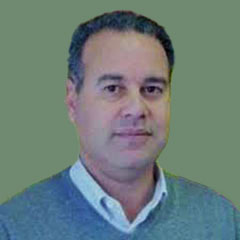
Elizabeth Skellam
Dr. Elizabeth Skellam is an Assistant Professor of
Chemistry at the University of North Texas and a researcher with the
BioDiscovery Institute. Her work centers on natural‑product biosynthesis and bioactive molecule discovery,
especially decoding and engineering fungal biosynthetic pathways to produce novel
compounds with potential applications in pharmaceuticals, agrochemicals, food, and
cosmetics. She earned her Ph.D. in Chemistry from the University of Bristol, following
an MChem from the University of Wales Swansea, UK.
Kui Tan
Dr. Kui Tan is a Research Associate Professor of
Chemistry at the University of North Texas, specializing in materials chemistry and advanced
spectroscopic methods. His research focuses on applying infrared spectroscopy and
other analytical techniques to investigate molecular interactions, materials for energy
conversion and storage, and environmental remediation applications. He earned his
Ph.D. in Materials Science and Engineering from the University of Texas at Dallas,

following his M.S. from the same institution.
Andrey Voevodin
Dr. Andrey A. Voevodin is a Professor of
Materials Science and Engineering and Associate Dean for Research at the University of North Texas, specializing in
plasma-assisted thin-film deposition, surface engineering, and high-temperature/coating
materials for extreme environments. His research focuses on developing adaptive, wear-resistant,
and thermally stable coatings and nanostructured materials for aerospace, tribological,
nanoelectronics, and additive-manufacturing applications. He earned his B.S. (with
M.Sc credentials) in Metallurgy and his Ph.D. in Materials Science from Tula Technical
University in Russia.
Hong Wang
Dr. Wang is a professor in the Department of
Chemistry. She is a synthetic organic chemist. Her research interests lie on synthetic methodology
development and design/development of novel organic materials for applications in
medicines and organic electronics. She received her doctorate from University of California
at Davis. She conducted her post-doctoral work at Stanford University and The Scripps
Research Institute.
Ruocun Wang
Dr. Ruocun Wang is an Assistant Professor in the Department of
Materials Science and Engineering at the University of North Texas. He specializes in designing and synthesizing novel
metastable nanomaterials for advanced energy storage applications. His research focuses
on developing transition-metal oxides and MXenes using solid-state synthesis and selective
etching, combined with advanced characterization techniques to understand structure–property
relationships. He earned his Ph.D. in Materials Science and Engineering from North
Carolina State University and completed postdoctoral research at the A.J. Drexel Nanomaterials
Institute.
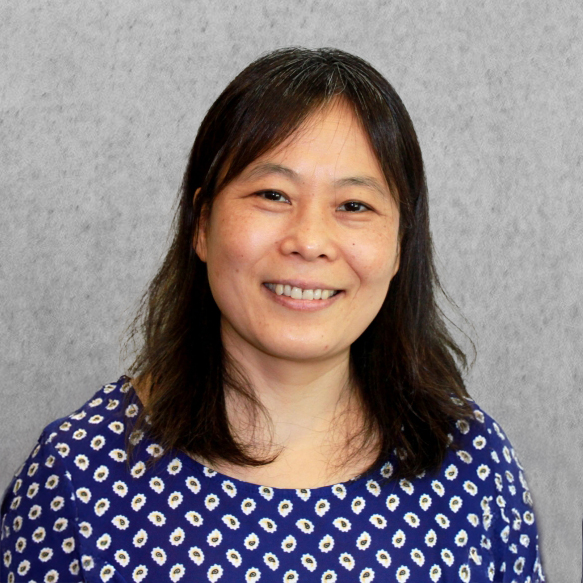
Yuanxi Wang
Dr. Wang is an assistant professor in the UNT
Physics Department. He received his Ph.D. degree at Penn State University. His research focuses
on developing first-principles computational materials theory, as applied to 2D materials

like graphene and layered compounds. His most recent interests include defect-based
qubits in 2D semiconductors, exciton physics in 2D materials, and modeling large-area
growth of highly crystalline 2D crystals. His work also involves tight collaborations
with experimentalists across multiple disciplines, with focus on the optical, mechanical,
transport, and catalytic properties of 2D materials.
Yuzhe Xiao
Dr. Xiao is an Assistant Professor in
Physics. He received his Ph.D. degree in Optics from the University of Rochester. His research
focuses on nonlinear optics, nanophotonics, quantum plasmonics, and thermal radiation.
His research group conducts both theoretical and experimental research in optics and
applied physics. His group explores the mid-infrared properties of materials using
infrared spectroscopy and thermal-radiation spectroscopy.
Yufeng Zheng
Dr. Yufeng Zheng is an Associate Professor in the Department of
Materials Science and Engineering at the University of North Texas. He specializes in the phase transformation and
deformation behavior of metals and alloys, focusing on stress‑induced transformations
and advanced alloy design. His research combines atomic‑resolution characterization
and additive‑manufacturing techniques to develop lightweight metals, including metastable
titanium and high‑entropy alloys, for aerospace, biomedical, and high‑performance
applications. He earned his Ph.D. and M.S. in Materials Science and Engineering from
The Ohio State University, following a B.S. in Physics from the University of Science
and Technology of China.
Eunho Cha
Dr. Eunho Cha is a Research Assistant Professor of
Materials Science and Engineering at the University of North Texas, specializing in energy‑storage materials and next‑generation
battery technologies. His research focuses on designing and characterizing anode and
cathode nanomaterials, carbon‑based materials, and interfacial/surface-engineered
electrodes for high‑performance rechargeable batteries, including secondary and solid‑state
systems. He earned his Ph.D. in Materials Science and Engineering and brings extensive
postdoctoral experience from the Korea Advanced Institute of Science and Technology
(KAIST), along with materials characterization and electrochemical evaluation expertise.
Ravi Sankar Haridas
Dr. Haridas is a Research Assistant Professor in
Mechanical Engineering, a position he has held since the spring of 2022. Prior, he was a post-doctoral research
associate in the Department of Materials Science and Engineering at University of
North Texas. He earned an M.Tech and a Ph.D. degree in Mechanical Engineering from
the Indian Institute of Technology Kanpur, India in 2019. His research interests include
experimental solid mechanics, additive manufacturing, mechanical characterization,
friction stir welding/processing, solid-state processing of metals, process-microstructure-property
correlation, high strain rate deformation, and high entropy alloys. He has published
around 30 research articles in peer reviewed journals and conferences.