 University of North Texas


The Texas Leadership Research Scholars Program, which debuted in Fall 2024, is a Texas Higher Education Coordinating Board research scholarship and leadership opportunity program for high-achieving graduate students with financial need.
UNT was among only nine public universities in the state selected to participate in the inaugural cohort of the program, which awards selected doctoral researchers a nearly $18,000 scholarship renewable for up to four years.
“The TLRS program provides access and opportunity to exceptional doctoral scholars to excel in their research, academics and graduate life. The funding removes barriers for our scholars as they expand their career and life experiences to be readied for the workforce. This investment by the state of Texas is highly impactful and life-changing for UNT's doctoral students,” says Brenda Barrio, UNT associate vice president for graduate studies and student research.
Read Quanisha Whittfield's story below and check back on the UNT Research website throughout Summer 2026 to learn more about other students in the inaugural group of Texas Leadership Research Scholars.
Mind, Body and Group Intervention
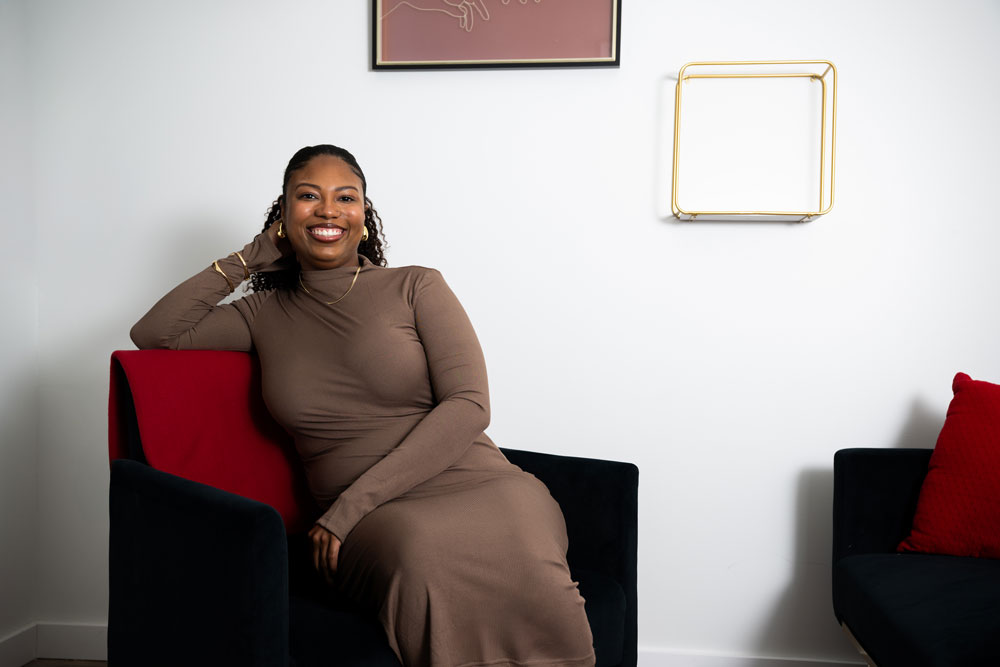
Growing up, Quanisha Whittfield knew she wanted to be a therapist. She loved helping her friends whenever they came to her for advice and even when she worked retail, customers would share their worries with her. It wasn’t until she hit a hard point in her life that she decided to pursue research in an effort to create the support she wished she had.
In 2020, the COVID-19 pandemic began while she was a master’s student and working full-time. Her required clinic hours began to be affected by the switch to telehealth. At the same time, the year also saw an increase in health inequities and racially motivated attacks, with researchers calling it a racism pandemic.
“Unfortunately, I wasn’t getting the support I needed at the time and my health suffered. As I started getting more Black women as clients, I realized I wasn’t alone — that we weren’t alone — in not getting the help we needed. When my concern was downplayed, that really motivated me to want to do this line of work and research.”
Now, Whittfield focuses on Black women’s holistic wellness, specifically focusing on the mind and body. She earned a scholarship to get a yoga teacher certification so she could bring that work into her doctoral research. Her dissertation looks to better understand the pathway between experiences with gendered racism, how Black women identify and relate to their gendered racial identity, and what impacts the two have mentally and physically.
“I’m using that data to inform a mind-body-group intervention for Black women and doing it in the community,” says Whittfield. “Gendered racism and the idea of the strong Black woman tend to cause us to isolate, making community one of the first things to go, but we really need group support.”
Whittfield is grateful for her advisor, psychology associate professor Martinique Jones, being supportive of community-based work.
“Our lab has been really fortunate that she encourages us to do public scholarship and making sure we can take the research that we do out of the academia bubble and bring it out to the community.”
For her next project, Whittfield is planning a special group therapy program that will combine yoga and therapy. For that, she plans to use cortisol testing to physically measure how her intervention is affecting the participants. A second group she’s developing for her externship also involves yoga and reaching out to the community.
“I want to get people to not only think about their mental health, but their physical health and how those relate.”
While providing and developing interventions for groups and individuals, Whittfield also develops workshops and provides consulting for businesses with the goal of making them welcoming and safe spaces for Black women.
“These systems weren’t necessarily built for us, but how can we adjust them to be more mindful of our health so that we can come out of work settings and different places we find ourselves and be more whole and well?”